
Ingredient Guide
What goes into men's herbal supplements
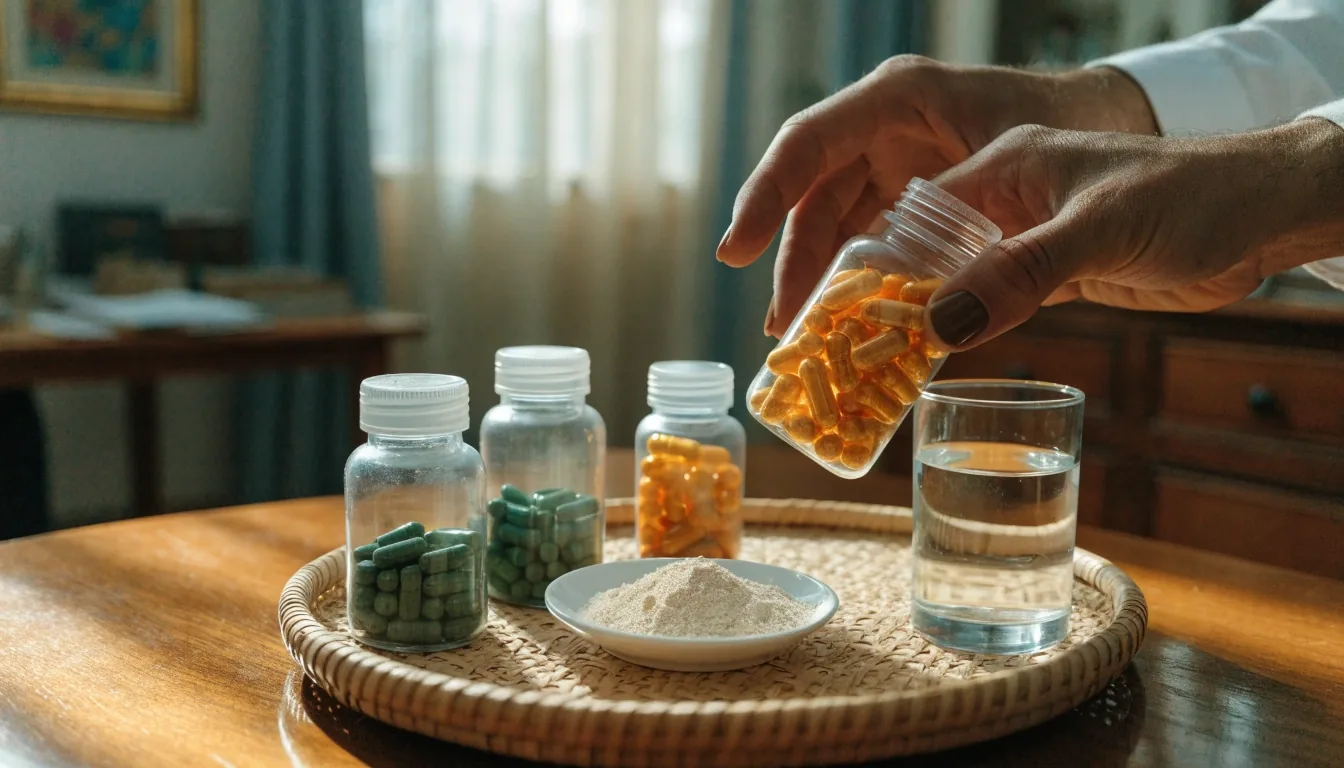
Indonesian men's formulas lean on a recognizable set of herbs. Some are imported, some grow here. This guide covers the ingredients you are most likely to meet on a suplemen pria label, what part of the plant is used, and how the label usually describes it.
Imported roots
Maca and ginseng
High-Andes maca root powder and Panax ginseng root, the two botanicals most often named first on a suplemen pria box in Indonesia.
Read the maca sectionLocal mainstay
Pasak Bumi and purwoceng
The Javanese and Sumatran roots that give Indonesian formulas their own character, plus the tongkat ali name you will see on export listings.
Read the Pasak Bumi sectionVitamins and minerals
Zinc, selenium, vitamin E
When a capsule is not purely herbal, these are the nutrients that carry reference values you can actually check.
Read the vitamin section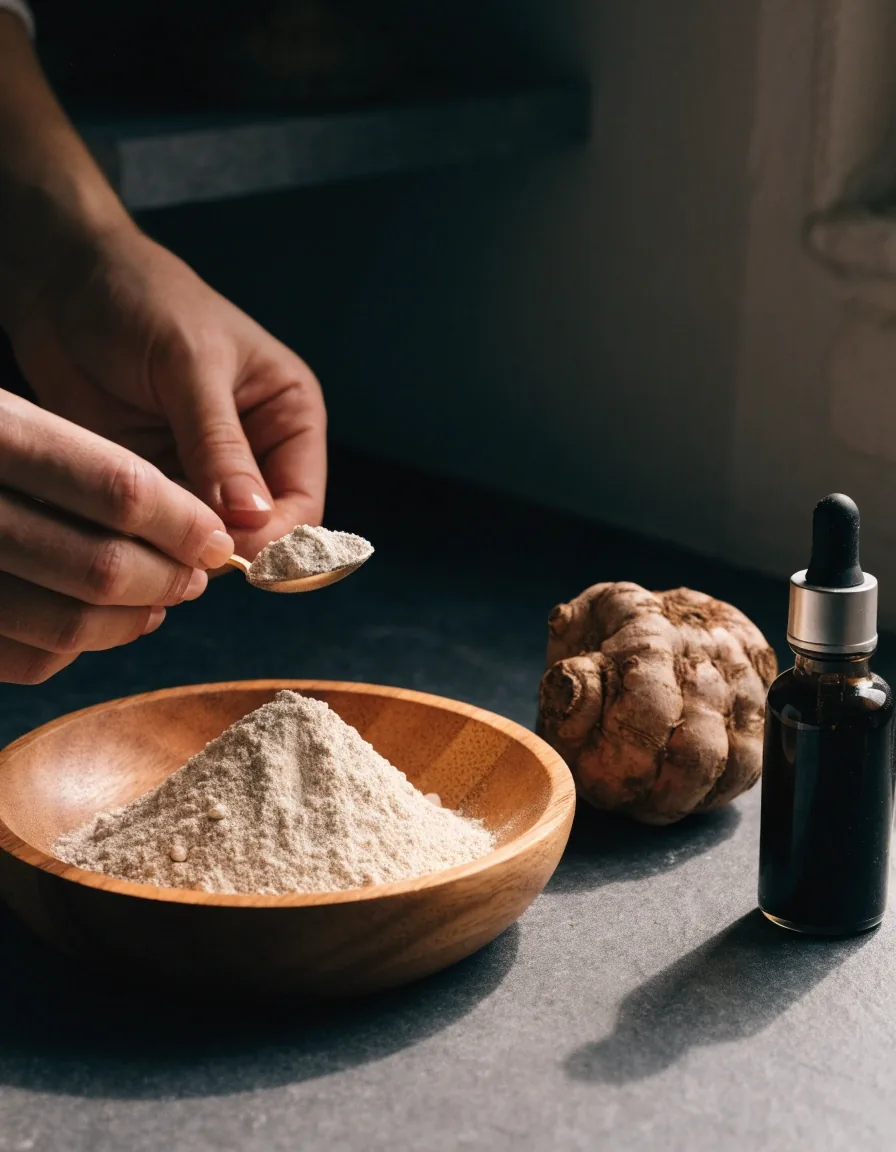
Root powder · capsules · extract
Maca and why it keeps appearing
Maca grows in the high Andes and arrives in Indonesia as a root powder or extract. Solaray Maca Root 525mg is a straightforward example: one herb, 100 capsules, listed in Guardian Indonesia's men's health selection. On labels, maca is usually tied to energy, stamina, and libido wording.
It is a root vegetable first, a supplement ingredient second, which is worth remembering when you read a dramatic claim. Because the whole root is edible, the powder you find on a shelf in Jakarta is closer to a ground food than to a concentrated extract, and the serving on the panel tells you far more than the front of the box does. When a listing says maca root powder 500 mg and another says maca extract 4:1, those are two different products wearing the same name.
A maca capsule is roughly a serving of a root that people in Peru have eaten as a vegetable for a very long time. That framing is more useful than any promise printed above it.
Panax ginseng
Panax ginseng is the classic ginseng, distinct from American ginseng and from Siberian ginseng, which is a different plant entirely. Labels tend to mention vitality and general energy; the root is usually standardized to ginsenosides, and that figure is the one worth checking on a supplement facts panel.
-
Root and standardisation
The dried root is the part used. A ginsenoside figure on the panel, often written as a percentage, tells you how concentrated the extract is. A product that simply states ginseng root powder has not promised any of that.
Read the panel
-
Where it sits in a blend
Indonesian formulas often list it among several botanicals, as Natureline Men's Health Kapsul does alongside Epimedium, Pasak Bumi, and Ginkgo biloba. Sitting in a blend usually means a smaller amount per capsule than a single-herb product would carry.
Compare per serving
-
Names that are not this plant
American ginseng is a related species with a different root profile, and Siberian ginseng is eleuthero, a separate plant used for its own reasons. If a label lists ginseng without the Panax part, the panel and the ingredients list are where you confirm which one you are buying.
Check the species
Local mainstay
Pasak Bumi, the local mainstay
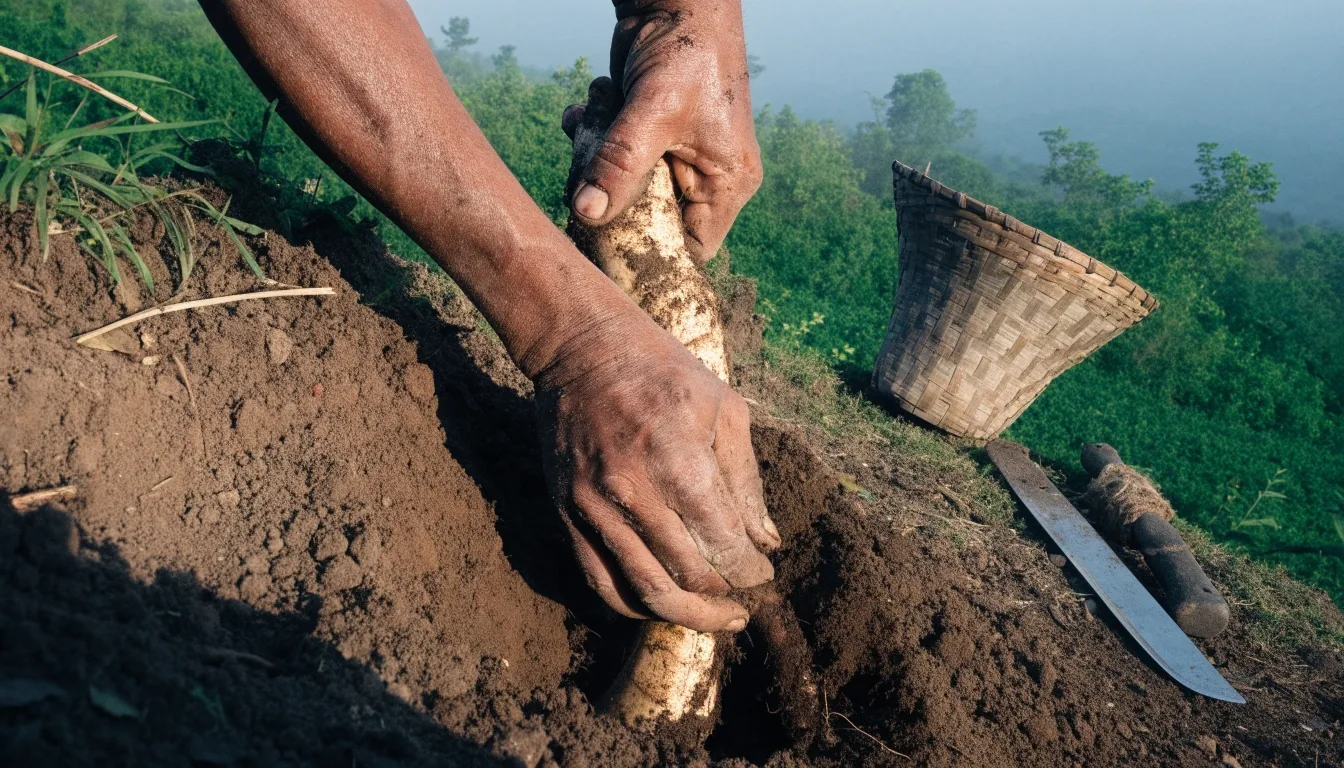
Pasak Bumi is the Indonesian name for Eurycoma longifolia, also sold internationally as tongkat ali. It appears in Epimaxx alongside purwoceng and maca, and it turns up again in Natureline's herbal stack.
This is the ingredient most closely tied to Indonesian tradition in the men's category, and it is usually positioned around stamina, vitality, and male performance. Root extracts are the common commercial form, and the plant itself grows in the same forests and smallholdings as many of the other roots on this page.
What to look for on the label
- Whether the panel says root extract or root powder, and the milligrams per serving.
- Whether an extract ratio is stated, because 1:50 and 1:200 describe very different concentrations.
- Whether Eurycoma longifolia or tongkat ali is used as the name for the same herb.
Epimedium and Ginkgo biloba
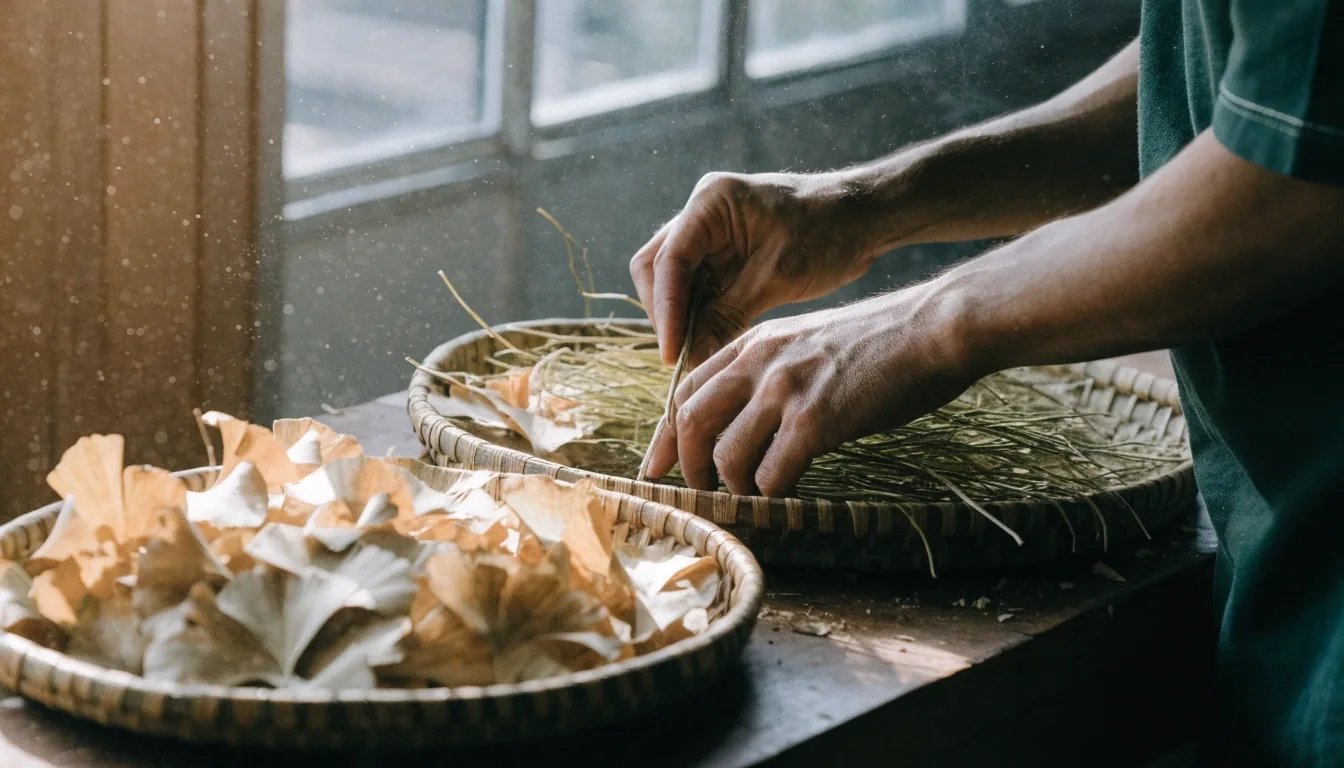
Epimedium, sometimes called horny goat weed, is a flowering plant used in traditional formulas and frequently paired with Pasak Bumi. Ginkgo biloba comes from a completely different tradition and is more often associated with circulation.
Seeing both in one capsule, as in Natureline Men's Health Kapsul, reflects how Indonesian herbal products combine traditions rather than following one. Neither ingredient is a vitamin, and neither carries a daily recommended intake, so there is no reference value to measure the amount against. Read them as botanicals within a blend, and let the per-serving milligrams do the talking.
Purwoceng and other local roots
Less exported, less standardised, and often listed without a clear amount per capsule.
Purwoceng is a Javanese plant with a long folk reputation, and it appears with maca and Pasak Bumi in Epimaxx. It is a good example of how local herbs get folded into commercial formulas that also use imported ingredients.
Because purwoceng is less standardized than maca or ginseng, the amount per capsule varies more between products. That is a reason to read the supplement facts panel rather than the front of the box. Where a standardised import states a marker figure, a local root may simply state a weight, and two bottles with the same herb name can sit far apart once you move from marketing line to panel.
See how capsules, powders and drinks compare on the same ingredients.
See how formats differVitamins and minerals in the same capsule
Many men's formulas are not purely herbal. Zinc and selenium show up regularly in fertility-oriented products, and vitamin E appears in blends that also carry plant extracts. GNC Mega Men Sport takes the opposite approach, leading with a multivitamin and mineral base for active men.
When a product mixes both, the vitamin amounts are usually the easier part to evaluate, because reference values exist for them. You can compare a zinc figure against a published daily intake in a way you cannot with purwoceng or a proprietary blend. That does not make the herbal half worthless, but it does mean the nutrient half deserves more of your attention than the label copy above it.

- Zinc Common in products marketed for fertility; a reference daily intake exists, so the panel figure is meaningful.
- Selenium Often paired with zinc; small amounts, check the unit on the panel because micrograms and milligrams are not the same.
- Vitamin E Appears in blends that also carry plant extracts, which is where the herbal and nutrient halves of a product meet.
- Multivitamin base The GNC Mega Men Sport approach: nutrients first, botanicals as the smaller secondary layer.
Extract strength and standardization
Two products can list the same herb and deliver very different amounts. Standardized extracts state a percentage or a milligram figure for a marker compound. Simple powders state the raw plant weight.
A label that says maca root powder 500 mg and one that says maca extract 4:1 are describing different things, even if the front of both boxes mentions stamina. The ratio tells you how much raw plant went into each unit of extract; the weight tells you how much you are taking. Check the panel, not the marketing line.
Form on the panel
What it tells you
What to check
-
Root powder 500 mg
The weight of the dried, milled plant in that serving.
That 500 mg is a raw weight, not a concentrate.
-
Extract 4:1
Four parts raw plant produced one part extract.
The ratio, and how many milligrams of extract per serving.
-
Standardised to a marker
A named compound is held at a stated percentage.
Which compound, and at what percentage per capsule.
-
Proprietary blend
A total weight for several herbs listed together.
Which individual amounts are not shown.
Label wording
How labels phrase benefit wording
Indonesian supplement labels rarely say treats or cures, because that language is restricted. They say helps maintain, supports, or traditionally used for. Those phrases are not interchangeable with a medical claim, and reading them precisely saves disappointment.
When a listing claims support for erection duration or sperm quality, as some product pages do, treat it as positioning rather than a measured outcome. A formula can be sold on a long-standing tradition without any study having been run on that specific bottle, and the wording on the back is written to stay inside the rules while still sounding encouraging.
If you learn to read support language as a direction rather than a promise, most of the confusion on Indonesian supplement pages disappears.
Questions we hear most
Short answers to the two things readers ask before they look at a panel.
Are maca, ginseng, and Pasak Bumi actually used in Indonesia?
Yes. All three appear in products sold through Guardian, Watsons, and Indonesian marketplaces, and Pasak Bumi in particular is a local ingredient rather than an import.
Does a longer ingredient list mean a stronger product?
Not necessarily. Long lists often mean smaller amounts of each item. A short list with clear amounts per serving is easier to evaluate.
Do these products replace a doctor's advice?
No. They are sold as dietary supplements, not medicines. If you have a health concern, or you take prescription medication, speak with a qualified professional before adding any supplement to your routine.
Questions about the guide itself? Reach CorePoise at Jl. Jend. Sudirman Kav. 52-53, Senayan, Kebayoran Baru, Jakarta Selatan, 12190, by phone at +62 21 5294 0608, or by email at [email protected]. We answer Monday to Friday, 09:00–18:00.

Next, see how these ingredients are sold
Knowing the herb is only half of it. The format on the shelf decides how much you take per serving, which matters more than the front of the box.